

Destination: A museum pops up in Chicago

manifesto 2

[Tom Biederbeck] Is it an institution? An organization? An experiment? All those and more. Just don’t call it a building: The Chicago Design Museum opened its (temporary) doors June 1, with exhibitions devoted to the work of Debbie Millman, Ed Fella, Alexander Rodchenko, IBM’s design history and storefront sign painting. Created by Tanner Woodford and Mark Dudlik, it aims to leverage the connections between visual culture and community. Here Woodford describes the conception, development and direction of this roving archive.

What is a design museum? What’s it designed to do?
That’s a question we’ve debated for the last six months or so. I define it as an institution that curates excellent visual ephemera, highlighting both modern and historical perspectives. By installing exhibitions with disparate meanings and removing work from its original context, a design museum can put the work in a new light.

We have high standards, and we’ve tried to curate to those standards — not necessarily to a specific audience in a specific place. This work could tour around the U.S., and in fact around the world, and it would be just as excellent no matter where you take it.

We don’t think a museum has to be a brick-and-mortar institution. It can be more celebratory.

Debbie Millman presents at the museum.

What’s the genesis of the museum?
As an undergrad at Arizona State in Phoenix about five years ago, I was working with my colleague Mark Dudlik to create a magazine. In the process, we realized there wasn’t a strong design community in Phoenix. Mark led the effort to do a Design Week there, which culminated in a conference where we invited speakers from all over the country.

Mark and I started talking about the lack of design museums in the United States. That led to the idea of doing a design museum our own way. I worked with Mark to open the first design museum in Phoenix, then we brought it to Chicago as a pop-up — a museum that can move between cities and keep the same feel, the same work, the same brand, but tour across the U.S.

There certainly is good design being shown in the U.S. and abroad, but we’re trying to do it in a different way — more focused, celebratory, experimental. Because of our size, we can be nimble; we can “fail faster” to get to better results. We can do things that bigger museums can’t. For example, we can take all of this work that’s on exhibition now and make an online archive, and let the work live on through the years.

Fresh Produced, an installation now on exhibit, depicts everyday storefront signage.

Take us on tour of the museum. What will people see?
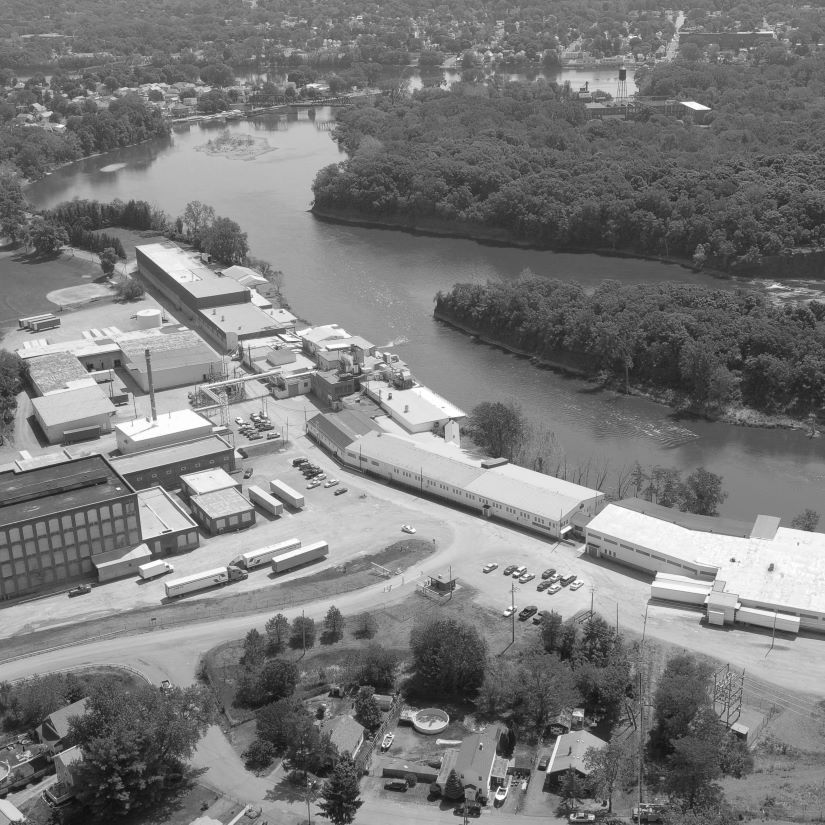
We’re in a 100-year-old building in Chicago’s Humboldt Park neighborhood. It was a stove and furnace factory that’s been restored in the last several years.

We’re on the second floor with 6000 sq. ft. When you walk in, you’ll see our manifesto, the reason why we’re doing this. As you turn left, we have an installation called Fresh Produced — which is all about hand-painted signs — next to 100 Years of IBM History … from a design perspective. Fresh Produced is quick and dirty, but it’s colorful and exciting. We liked putting that hand-painted work next to corporate work that might belong in IBM’s headquarters.

IBM’s design history

Next you’ll see Debbie Millman’s visual poems Look Both Ways — the personal work of someone who’s spent her career doing identity and brand work for big companies.

Left: from Debbie Millman’s installation Look Both Ways. Right: invitation to her presentation. Images courtesy Debbie Millman.

If you turn around and walk back, you’ll end up in Rodchenko 120, a show with 20 Russian constructivists paying homage to Alexander Rodchenko. Go a little further and you’ll find our store, Ignorance and Ambition, where we sell limited-edition goods, most of them created just for us. The store is run by my wife Amanda, who’s also one of our directors, as is Mark. When you walk out of the store, you’ll see Ed Fella’s installation More Into Less.

The museum store, Ignorance and Ambition

Where did the name of the store come from?
James Victore came to speak during Phoenix Design Week, and at the end of his presentation he said that two things that go well together are ignorance and ambition. It was the perfect summation of what we were trying to do. We like the idea of pairing ignorance and ambition to become more successful.

What happens next to the museum?
The current exhibitions run through June 30. Then the museum will be torn down, and we’ll start looking for a new space for new installations next June. We’re planning to do another big installation somewhere in the city over the summer, along with smaller events, so we’ll be extending our brand. This is all a giant experiment. We’re not sure exactly where it will go.

The Chicago Design Museum is open to the public Fridays and Saturdays, 12–8 p.m., through June 30, 2012.

Unless otherwise noted, all photos by Jennifer Shaffer Photography

Share Post
Recommended

Leave a Reply

[BLOG] HOW+Print Come Together in the latest Moo Luxe Project: If you you love HOW and PRINT Magazines (and wh... http://t.co/cXZVY4LB3o @feltandwire - View on Twitter
Are you a pinning passionista? Share what inspires you to be a maker in our latest #wwymt challenge! http://t.co/sTu5nRF1gr @feltandwire - View on Twitter
[BLOG] HOW Design Live – Visit Us in Booth #1709!: HOW Design live, held June 23-25 at the Moscone Center in S... http://t.co/aO796oXteR @feltandwire - View on Twitter
Submit a Topic or Article
We want to hear from you!
Send us your ideas for future articles, past inspirations, and present insights.
Submit a Topic or Article