
[Pam DeLuco] I’ve been making paper since 2007. I travelled to Chicago to make paper at Columbia College with Drew Mattot, the co-founder of Combat Paper. He had offered to teach me how to make paper for a book I was writing called A Common Thread: Stories from my Wardrobe. I planned to letterpress print the book using handset (by me) metal type, and it was important to me that the paper be handmade using cotton rag.
My watermark is a little more than 1.5 in. high and about 1 in. wide.
A papermaker has to have a watermark! I had made a watermark in advance from copper wire with help from Tessa Kemp, a friend who is a jewelry-maker. After two weeks at Columbia I flew back to San Francisco with 2200 8.5 x 11-in. sheets I had made from cotton and recycled paper (shown above). I also made 300 sheets of 11 x 17-in. paper from denim for the covers of my book.
I asked Drew how much denim I would need, and he said about 50 lbs. of denim cut into one-inch squares to make 100 sheets. (I think I must have misunderstood him, because I actually needed about 5 lbs. per 100 sheets.) I went ahead and put the call out to all my friends, and everyone donated their old denim to my cause — most of my old denim had been confiscated when I was on What Not To Wear. One friend worked at Earth Justice, and she put out an e-mail to her co-workers and those people are so green, they keep everything. I loved seeing all the old jeans people were hanging onto. The best was a pair of Jordache jeans from the ’80s. …
I made denim paper for the Edible Schoolyard project at the Levi’s Workshop in San Francisco.
In the summer of 2009 I became involved with the first Levi’s Workshop, which celebrated San Francisco’s tradition of printing. When Adam Katz, the programming director, asked me if I’d like to work on a printing project with the Edible Schoolyard children, I said “Yes, and shouldn’t we be printing on denim paper?” Adam loved the idea and arranged for me to do a papermaking workshop on the inaugural weekend of the workshop. Drew Cameron, the other co-founder of Combat Paper just happened to be in town with his portable Hollander beater. We set it up on the sidewalk on Valencia Street, creating quite a spectacle.
I love this video. The cameraman did a great job of capturing the highlights of the day.
Renowned chef and restaurateur Alice Waters, who is also the founder of the Edible Schoolyard, gave the children this prompt: “Where is the art in a garden?” The students were responding to her question.
The reason I chose this format for the book is it’s a structure in a single page. I thought it was great to expose the children to the idea that they can make a book using just a piece of paper, a pair of scissors and their hands. I always like for people to have a do-it-at-home-yourself version.
I saved the pockets from the jeans I cut up to make the denim paper. Each student got to put his or her book in a pocket and take it home. Additional copies of the book were given out at a private dinner that Alice Waters hosted at the Levi’s Workshop.
Somehow a piece of the denim paper, made on the sidewalk, made its way to the Levi’s Global offices across town, with a hangtag with my name and contact information. (The printshop was under the aegis of Levi’s USA.) Someone over there saw it and thought it would be good for the TEDWomen conference, since Levi’s was going to be sponsoring. So Marcy Moriconi at Levi’s commissioned me to make the Shape What’s to Come journals.
One afternoon I told Marcy that I would be unavailable to talk because I had to take care of my bees. She was taken aback that I was a papermaker and a bookmaker, and a bookkeeper and a beekeeper! She said that I was very much in line with their Shape What’s to Come community, and they ended up doing a video of me as a woman artist. I now have my own Hollander beater and a papermaking studio — which you can see on the video. I look forward to sharing the craft with others. One piece of advice from Drew Mattot that I now use when I teach people to make paper is, “Don’t look back! The important thing is to get a feel for the craft — once you have that, your sheets will turn out consistently beautiful.” It’s true — you don’t need to “fix it,” you need to “learn it.”
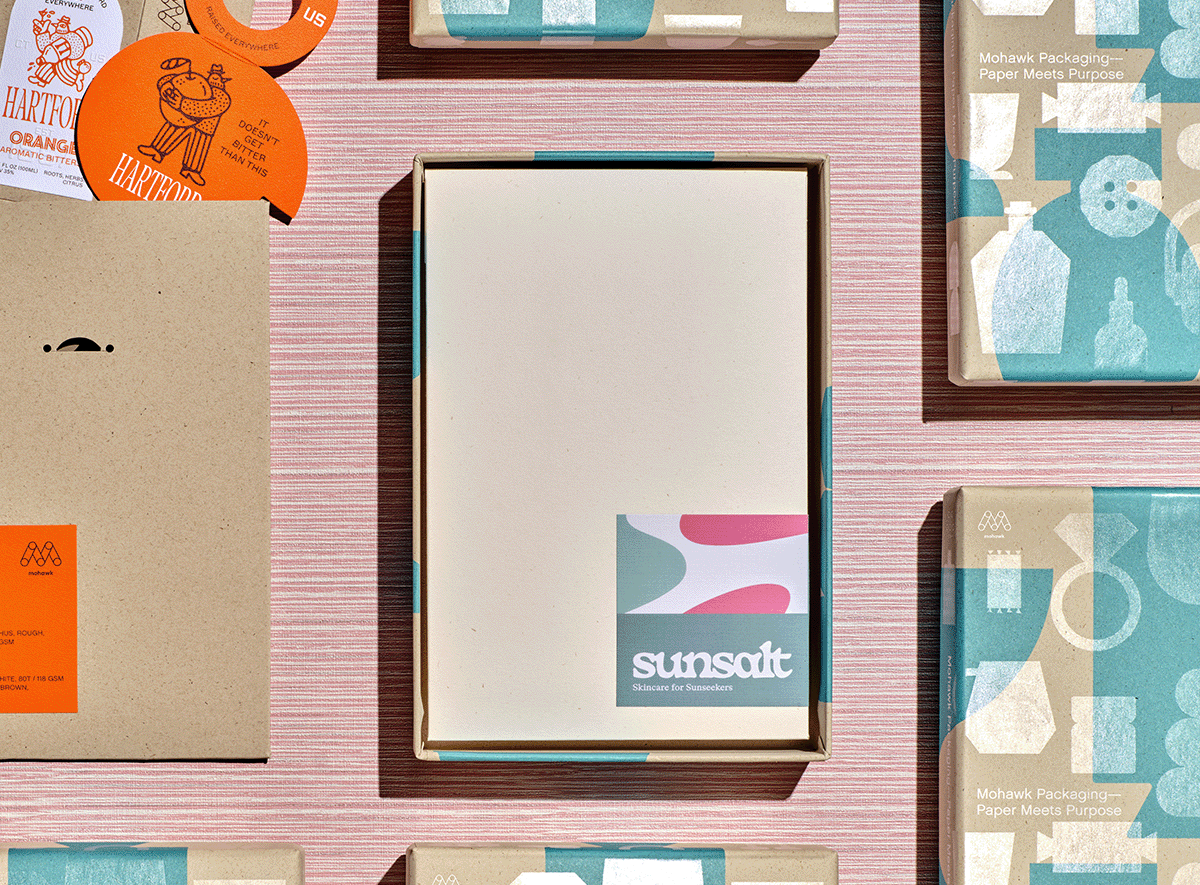
When I don’t make my own paper, I go exclusively with Mohawk Loop. I think it’s the cleanest out there … and super-fitting for the Levi’s Shape What’s to Come journals. If you’re going to go through the trouble to use old denim to make paper, you have to use a really recycled paper for the innards. Lots of papers claim to be recycled, but they aren’t when you read the label and understand the terminology. I asked a lot of questions before I became comfortable with the Loop line, and now that’s all I’ll use. I know it’s wood pulp – but it feels like paper should feel, and it’s as easy on the environment as possible.
Extreme crafting: Pam DeLuco has recently cooked up what she believes to be the perfect blend of jute coffee sacks to make jute paper. In her kitchen, her stove held a pot of simmering jute at pH 11, while her countertop hosted a jar of fermenting Kombucha at pH 3. Good thing she had a wide range of pH test paper. Last year, she wrote about Combat Paper for Felt & Wire.


Comments (3)
gorgeous, dolling! we make one heck of a team!!
What a superb story. I especially love how you saved the pockets of the jeans and gave them to the students. Brilliant! Thank you for sharing.
I’m excited to see where this goes next!
Wonderful story and well deserved recognition for Pam – an amazing artists and artisan…